
As summer winds down and the trees start shifting gears, autumn quietly opens a golden window for garden maintenance. And if you care about how your trees look come spring (and how safe they are through winter), now is the time to act.
Whether you’re worried about safety, light levels, or just keeping the garden looking sharp—this season is ideal for a touch of tree care. Here’s what we recommend.
1. What Trees Are Doing Right Now
Autumn isn’t just about colour changes and falling leaves. Trees are heading into dormancy. That means:
- Energy shifts below ground
- Growth slows right down
- Leaves drop and structure becomes visible
Which is great news for tree care: you can see what’s going on, spot any problems early, and tidy things up without disrupting growth. It’s also easier on wildlife – nesting is long over, and hibernation hasn’t quite kicked in yet.
2. What Tree Services Are Best Done Now
Pruning, Shaping & Corrective Work (with Care)
Autumn offers a tempting margin for pruning, but with caveats. We don’t take a one-size-fits-all approach. Here’s how we balance opportunity with caution:
What We Can Do
- Remove dead or diseased wood, crossing branches, or weak limbs close to structures.
- Thin internal branches to improve airflow and light (but only carefully).
- Make small corrections to shape or reduce shading—without drastic surgery.
**What We **Might Hold Off Because of guidance from Trees.org.uk, we know that pruning wrong branches or making large cuts at the wrong time can accelerate decay, introduce disease, and stress the tree.
- Avoid removing very large branches unless absolutely necessary — big wounds are inviting to pathogens.
- Avoid heavy pruning in autumn on species prone to fungal infection or “bleeding” wounds like cherries or maples. The moist conditions can favour fungal spore activity.
- Where we do prune, we follow strict cuts: use step cuts (a shallow undercut first, then a top cut, then final cut at branch collar) to avoid tearing the bark.
- The final cut should follow the branch bark ridge to the branch collar, keeping the wound minimal and allowing the tree to compartmentalise the wound as efficiently as possible.
- We never apply wound paints or dressings—research shows they can trap moisture, impede the tree’s self‑healing, or even feed pathogens.
Best Practice: Tools, Cleaning & Execution
- Use sharp bypass secateurs for small cuts. Avoid anvil-style tools which can crush tissue.
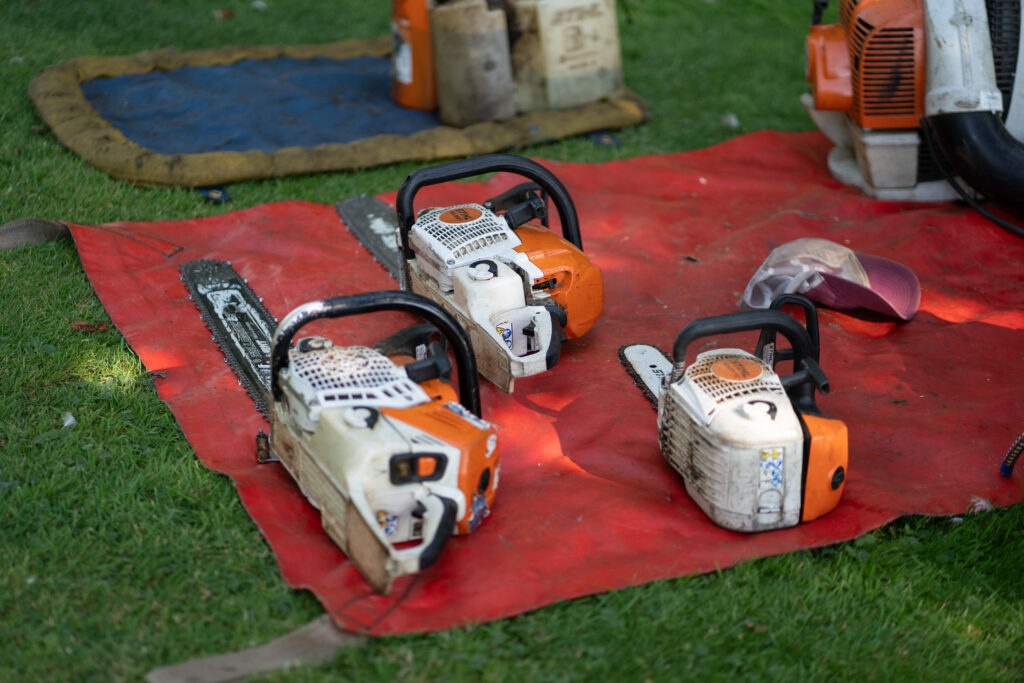
- Saws for larger branches must be sharp and used carefully (respecting manufacturer safety).
- After every job: disinfect your tools to avoid passing diseases between trees.
- Keep the number of cuts minimal, removing only what’s essential (over‑pruning stresses the tree).
Timing & Species Sensitivity (Autumn Nuance)
- The British Standard (BS 3998) suggests that final cuts should not exceed one‑third the diameter of the parent stem — this helps reduce excessive wounding.
- Many deciduous species are best pruned in late winter or summer, not autumn, especially if they’re sensitive to fungal pressure.
- Some species (e.g. cherry, plum) have lower tolerance to fresh cuts when spores are active — so we may delay shaping cuts until conditions are safer.
- Even when pruning in autumn, only remove what is necessary to maintain safety or structure; defer decorative or heavy shaping until a lower‑risk season.
Tree Health Checks
With leaves gone, we can see:
- Branch structure
- Deadwood
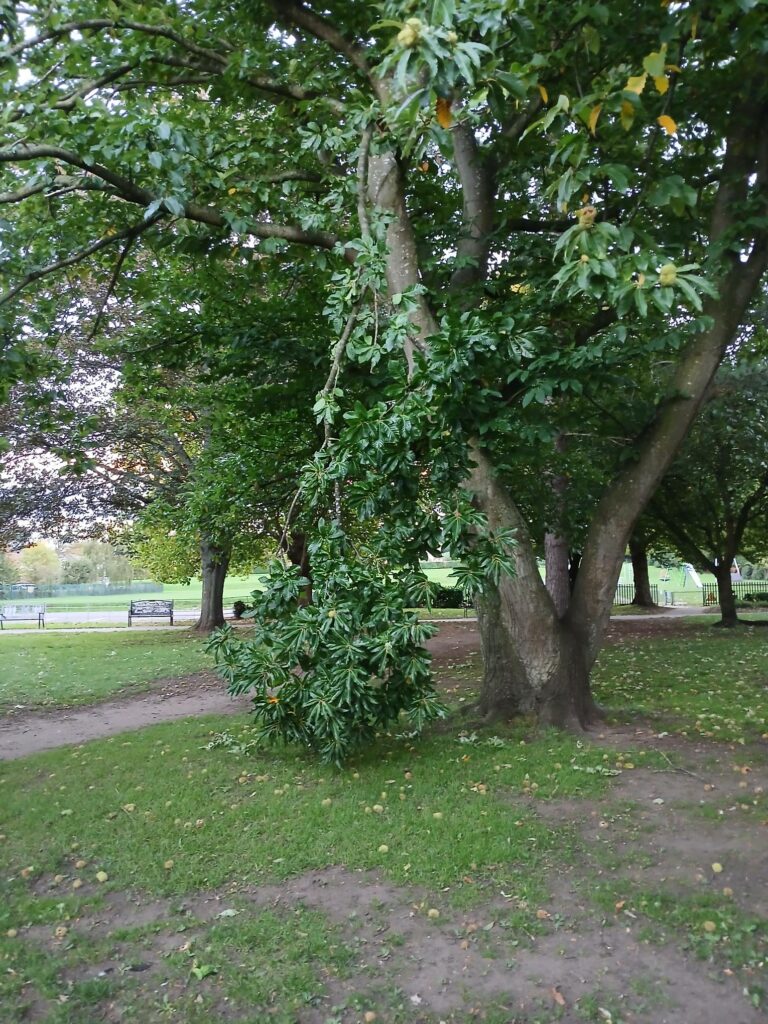
- Cracks or cavities
- Fungal growth or decay
Think of it like a tree MOT — it helps us spot small issues before they become costly ones.
Removals (If Needed)
Autumn is ideal if a tree needs to come down:
- Soil is still workable
- Wildlife won’t be disturbed
- We can fell and remove with less risk to surroundings
Planting New Trees
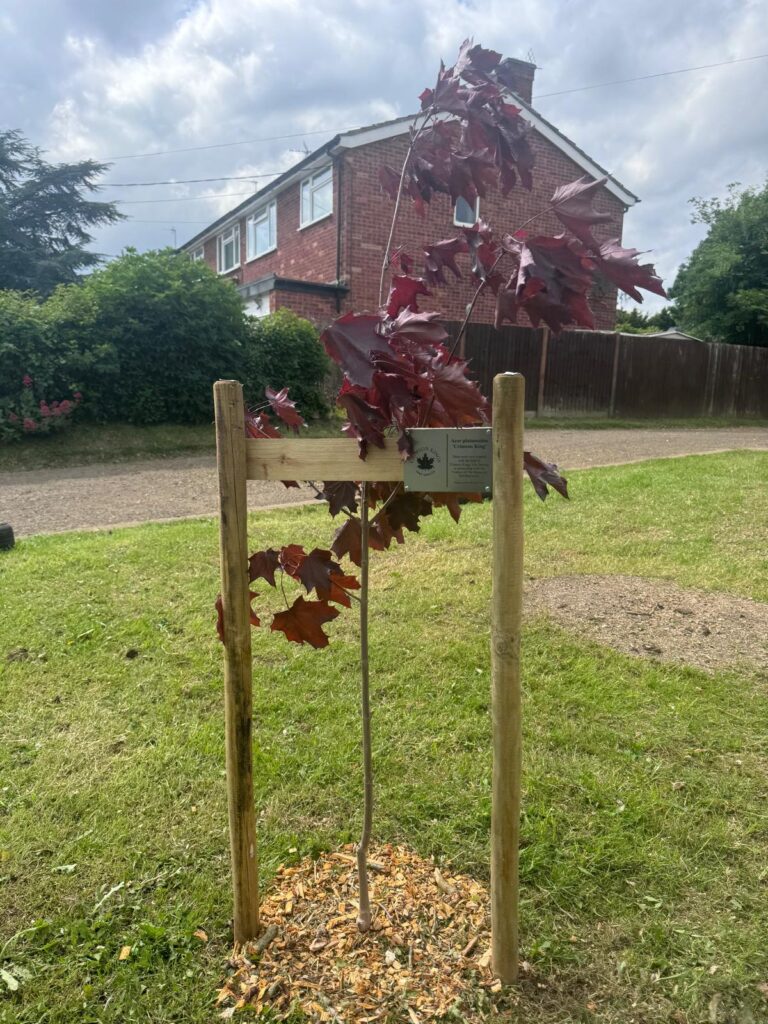
Want to replant? Autumn is a great time to plan, source, and prepare for bare-root planting in winter. It gives your new trees the best start.
3. Why Waiting Can Backfire
It’s tempting to leave tree work until spring. But that can cost you. Here’s why:
- Storm damage risk: Winter winds and weight from snow or ice take a toll. Weakened limbs or old wounds give way at the worst time.
- Nesting laws: Come March, many trees are off-limits due to nesting birds and protected wildlife.
- Everyone books in summer: Get ahead of the rush. Autumn gives you first pick of slots and a cleaner job site.
But we won’t just prune for the sake of it.
Some fungal diseases thrive in damp autumn air. If your trees are high-value or sensitive, we might hold off on major pruning until winter when the air is drier and spore levels drop. We balance safety, tree health, and seasonal timing so your garden gets what it actually needs.
4. How to Get It Right (Without Guesswork)
You don’t need to know all the Latin names or growth cycles — that’s our job. But here are a few things you can do:
- Take a walk after the leaves fall – spot limbs that worry you
- Check for fungi or peeling bark near the base
- Notice where sunlight isn’t reaching anymore
- Think about how you want the garden to feel by next spring
Then give us a ring. We’ll visit, talk it through, and suggest what needs doing (and what doesn’t).
5. A Note on Aesthetics
Let’s be honest — you want the garden looking tidy. That might mean shaping a few trees, opening up light, or removing the scruffy ones that never quite recovered from last year’s frost.
Every Crimson Kings job ends with a spotless site, clean cuts, and a garden that looks like someone cared. Because we do.
6. Your Autumn Tree Checklist
- Any dead or hanging branches near paths or buildings?
- Cracks, cavities, or decay visible in major limbs?
- Fungi at base or unusual leaf loss?
- Trees casting too much shade or crowding beds? Fancy planting new trees this winter?
If you’re ticking a couple of those, let’s talk.
7. Final Word (Before the Wind Picks Up)
Autumn isn’t downtime. It’s the smart season. Tidy now, plan ahead, and give your trees the best chance to thrive.
Whether it’s pruning, planting, or just making sure nothing falls in the next storm, we’re here to help you get it done right — no drama, no jargon.
Want to book in a walkthrough? Drop us a message. We’ll bring the expertise, you bring the cuppa.